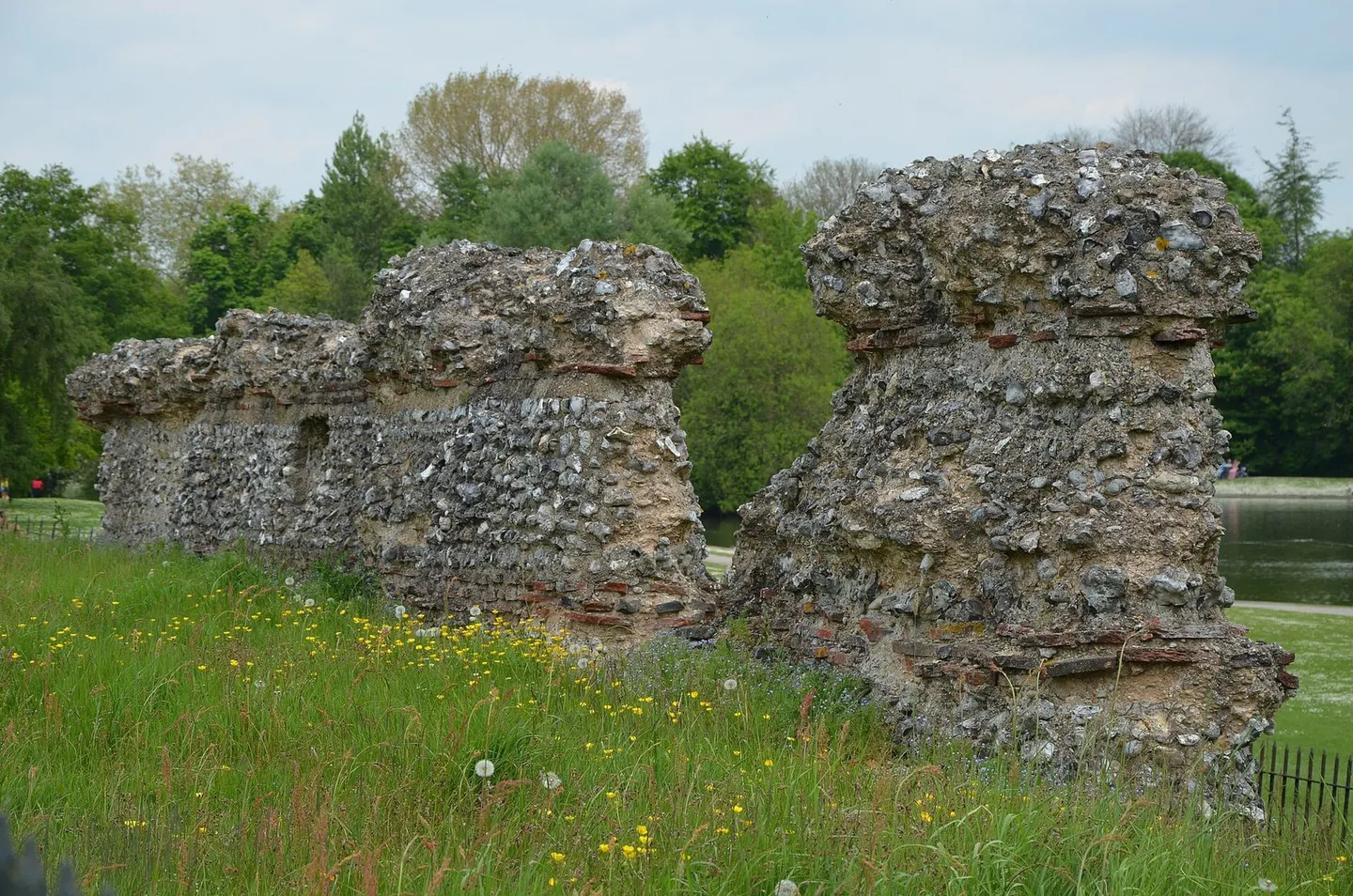
Flint-and-brick walls of Roman Verulamium, up to four metres high in places, run across a park on the edge of St Albans
Open accessfree to visit at any reasonable time
Substantial ruinsruined, but plenty survives above ground
Boudicca’s army burned the first Verulamium around AD 60, and the town rebuilt after the attack grew into one of the largest in Roman Britain. Between AD 265 and 270 the town was ringed with a wall of flint rubble set in mortar, laid with bands of flat Roman brick, about two miles round. It stood some five metres high, with a walkway along the top behind a parapet, an earth bank piled against the inside, and a ditch as much as 29 metres across in front.
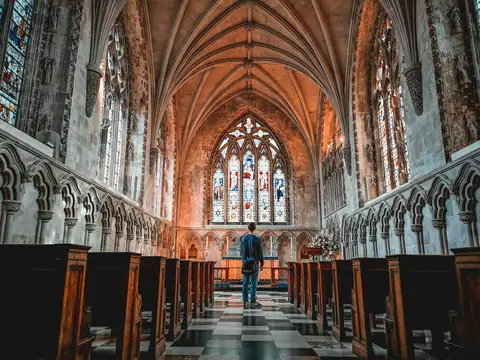
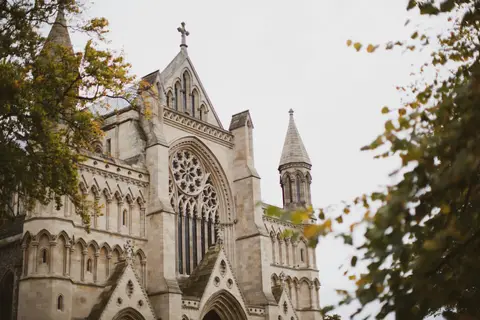
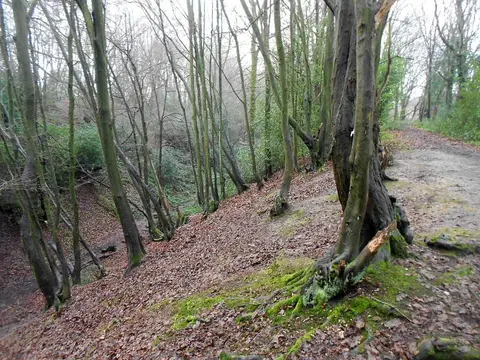
In Verulamium Park the wall survives up to four metres high in stretches, stripped of most of its flint facing, and the dip of the ditch still shows beside it. Look out for the footings of a pair of towers and, further east, the low remains of the London Gate, the entrance for traffic on Watling Street, with two roadways and two footways. The Norman builders of St Albans Abbey treated the ruined town as a quarry, and Roman brick from here is built into the piers of St Albans Cathedral up the hill.
You can walk along the wall free in daylight, about a kilometre from St Albans Abbey station, and the Verulamium Museum across the park holds finds from the Roman town.
Full name: Verulamium, part of wall and ditch of Roman city
More at the National Heritage List entry