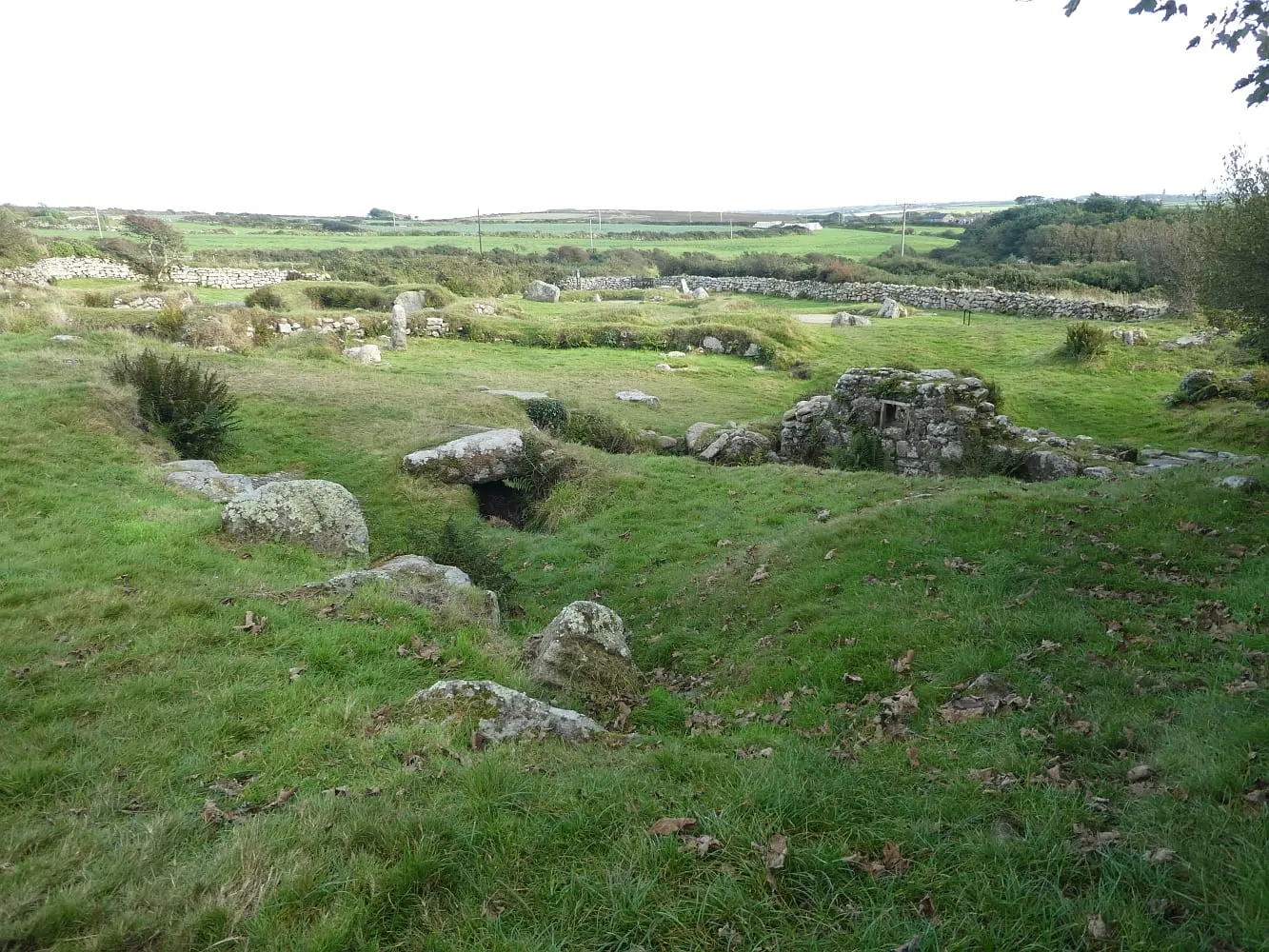
An Iron Age and Roman-era village near Sancreed, its stone house footings built around a fogou, an underground stone passage whose purpose isn't known
Open accessfree to visit at any reasonable time
Standing remainssubstantial fabric survives to stand in front of
Underground at Carn Euny runs a stone-walled passage called a fogou, a type of monument that survives only in far west Cornwall. The passage runs about 20 metres, kinking slightly partway along, before opening into a round stone chamber whose roof has since collapsed. What fogous were actually used for isn’t recorded — a hiding place, perhaps — and this one lay hidden until tin prospectors stumbled on it in the 1840s.
People first built round houses of timber and turf here around 500 BC, replacing them with stone houses a few centuries later, and the low walls you can walk among today, some no more than a metre tall, date from the last phase of building, between the 2nd and 4th centuries AD. Around 40 acres of surrounding fields fed the village, where families grew rye, barley and oats, and kept sheep, goats and cattle, alongside probable trade in tin. The village was abandoned by about AD 400, for reasons that aren’t recorded, and stayed empty for well over a thousand years.
The farm track in is free to use, though it can turn wet and boggy after rain, with a couple of stiles to cross. West Penwith Moors and Downs is right next door, and the Boscawen-Un stone circle is a couple of miles east.