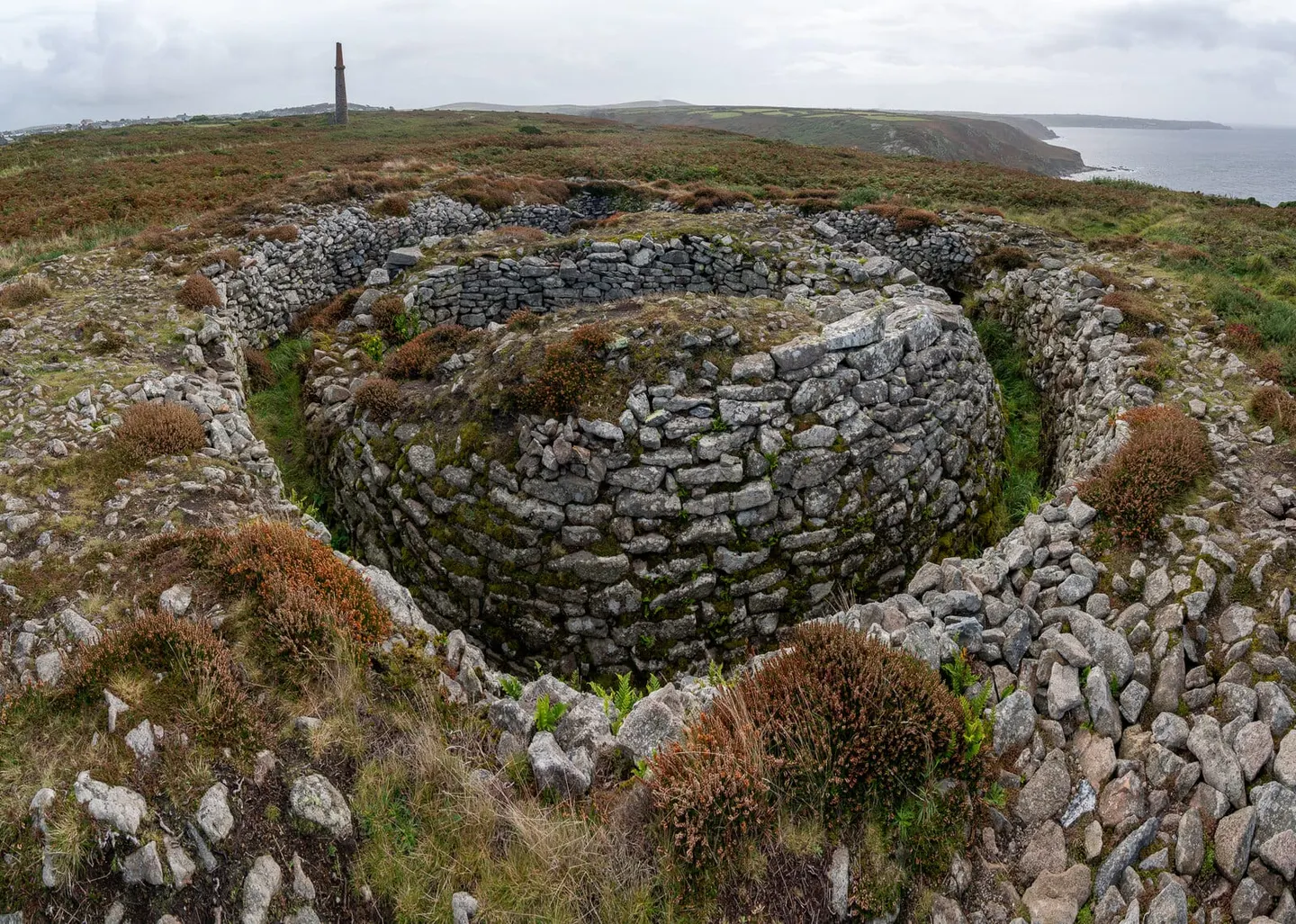
An unusually complex Bronze Age burial cairn on the cliffs near Cape Cornwall, shown much as Victorian excavators rebuilt it in 1878
Open accessfree to visit at any reasonable time
Standing remainssubstantial fabric survives to stand in front of
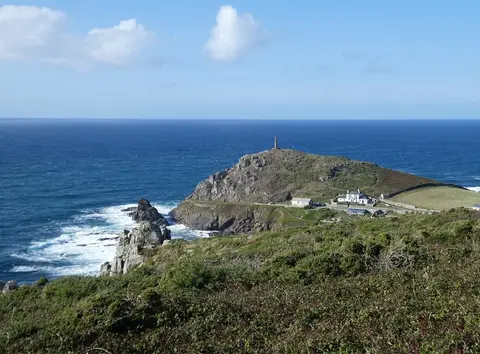
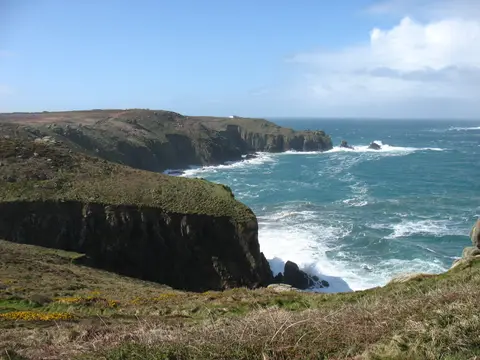
What you see at Ballowall Barrow today owes almost as much to the 1870s as it does to the Bronze Age. Cornish antiquarian William Copeland Borlase dug into the mound in 1878, after finding it buried under old mining spoil, then rebuilt sections in stone to show off what turned up — a rare double-walled cairn holding several small stone chambers, called cists, some still containing pottery and cremated bone from the Bronze Age. That rebuilding means the barrow’s original form is hard to read now, though its position is clear enough — a wide, roughly circular mound perched above the South West Coast Path on the cliffs west of St Just. For more prehistoric sites on this stretch of coast, Carn Euny Ancient Village lies a few miles south-east.