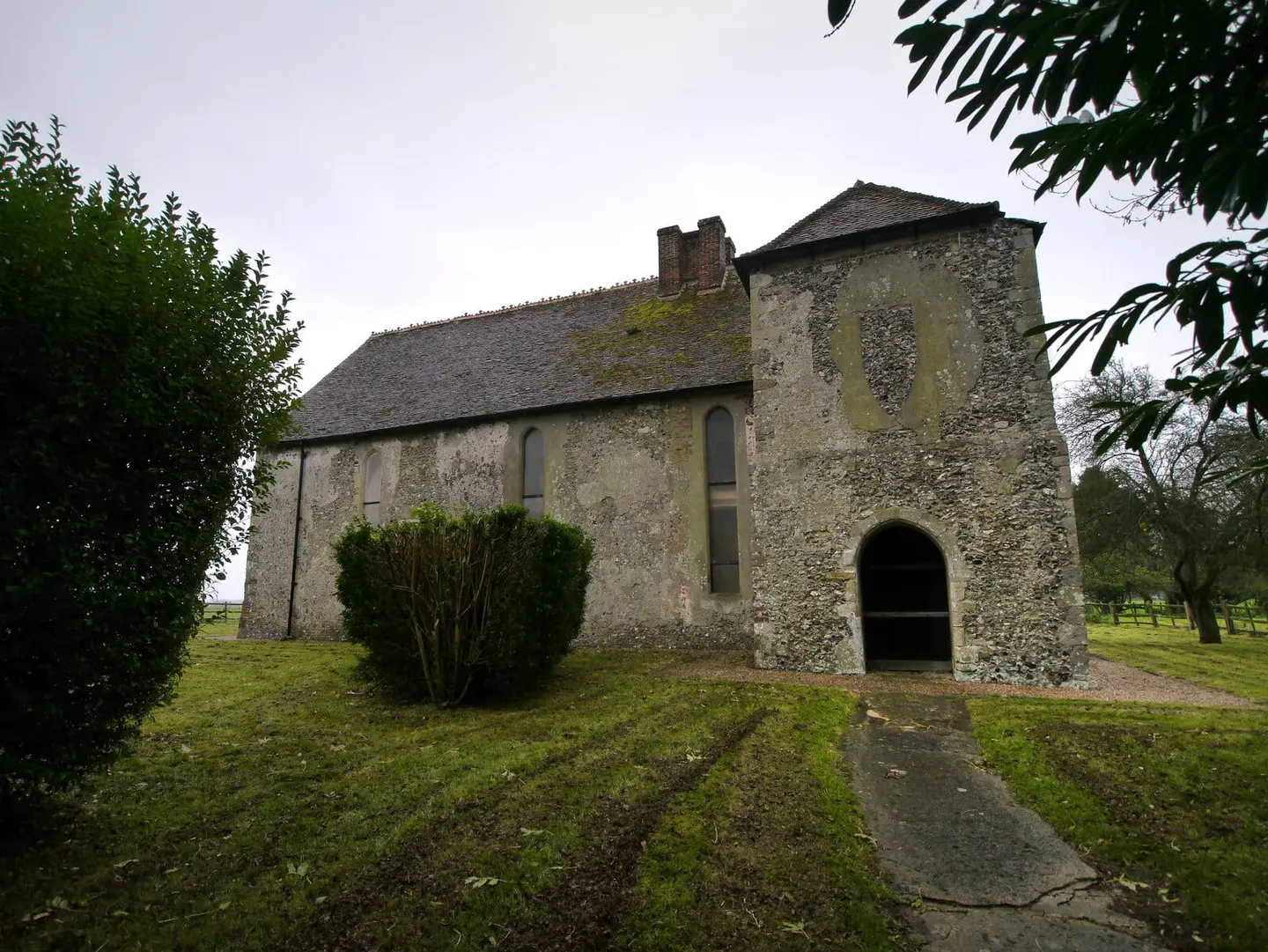
A 13th-century Knights Hospitaller chapel on the Kent downs that spent four centuries as part of a working farmhouse
Open to visitorsan English Heritage site — check opening times and admission before you go
Substantial ruinsruined, but plenty survives above ground
A working farmhouse used this flint-walled chapel for four centuries, its original windows swapped for casements and a brick chimney pushed through one wall, an unlikely turn for a building put up around 1230 for the Knights Hospitaller, an order that began in Jerusalem after the First Crusade, running a hospital that cared for Christian pilgrims before growing into a fighting force defending the Holy Land. Their emblem, an eight-pointed cross, is still used today by St John Ambulance.
Swingfield was one of more than thirty English communities known as preceptories or commanderies, manor-like estates each led by a commander and staffed by chaplains, clerks and servants supporting the order’s work overseas. A count taken in 1338 found a knight-commander, three chaplains and a dozen more living here, alongside a working farm with barns and a dovecote. Henry VIII closed the community during the Dissolution of the monasteries in 1540, after which the chapel became part of a farmhouse, with new floors inserted inside while its crown-post roof — a medieval timber frame raised on a single central post — stayed in place overhead, its wood felled around 1400. Restorers in the 1970s stripped the later floors back out, returning the building closer to its original open shape, though the domestic conversion is still easy to spot.
You can look at the chapel from outside during daylight hours; stepping inside is limited to occasional open days. It sits right by Alkham, Lydden and Swingfield Woods, with Shepherds Well Station about five kilometres away.