Two ornamental gateways that once formed part of Portsmouth's town defences, one moved from its original spot, one still exactly where it was built
Open accessfree to visit at any reasonable time
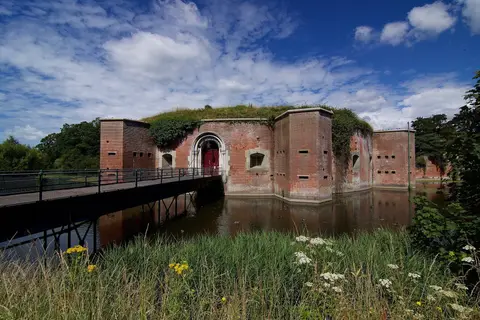
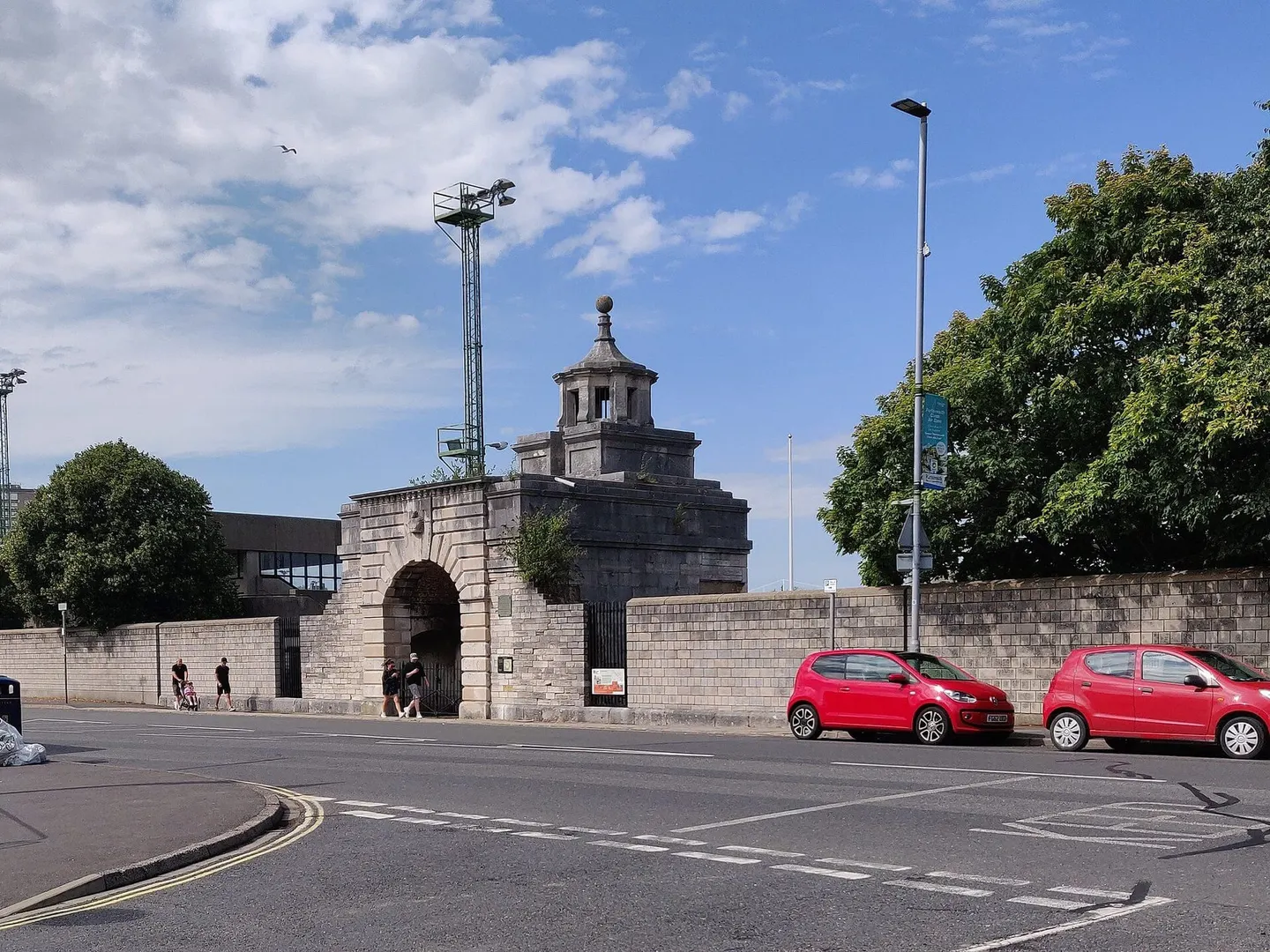
Portsmouth’s old town walls have almost entirely gone, but two of their gateways survive as standalone monuments a few streets apart. Built in 1760, Landport Gate is the only one of the original gates left on the spot where it was built, and once served as the main way in and out of the walled town; Nicholas Hawksmoor gets the credit for its design, even though the gate went up decades after he died. King James’s Gate is older, dating from 1687, and originally stood in Broad Street on Portsmouth’s south-west corner; workers took it down in 1860 and rebuilt it here in the early 1900s. Landport Gate is a plain stone arch topped with an eight-sided turret, while King James’s Gate is brick faced with stone, its arched opening flanked by smaller arches on either side. Neither gate has an interior open to visitors, and both simply open onto everyday ground now — King James’s Gate leads into the United Services Recreation Ground — and the Royal Garrison Church is a short walk south-west.