A medieval village in Lincolnshire, deserted by the 1600s, its house plots and lanes preserved as grassy bumps and dips in a single field
Open accessfree to visit at any reasonable time
Gainsthorpe first appears in the Domesday survey of 1086, recorded as ‘Gamelstorp’ and taxed as a small holding under the Norman lord Ivo Taillebois. By 1208 it had grown much larger, with 19 or more fields around the village, plus its own chapel, windmill and bridge.
Quite why Gainsthorpe was abandoned was never written down. A survey from 1616 already found it deserted, without so much as a cottage left standing, and locals later told Abraham de la Pryme, who visited in the 1690s, that the last inhabitants had been thieves, driven out by neighbouring villagers. An antiquary by trade, de la Pryme thought it more likely that the village, like plenty of others in the area, had simply been turned over to sheep once wool became more profitable than growing crops.
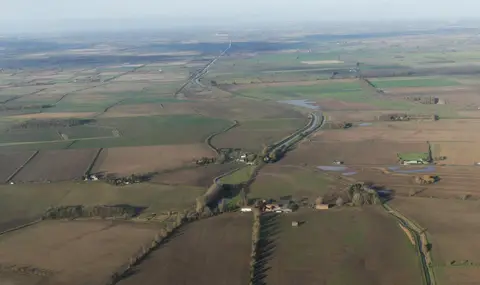
What survives now is a single grassed field scored with the low ridges and sunken traces of old streets and house plots. Three or four sunken lanes cross the site, and around 25 building platforms sit inside roughly 15 small enclosures known as crofts, each probably a family’s house plot and garden; the largest platforms, as long as 55 feet, mark barns rather than houses. In one corner, a circular mound and a rectangular hollow are thought to mark a dovecote and a pond, perhaps part of the senior farmer’s own house. The site is free to walk round, any day of the year, and Kirton Lindsey Station is a couple of miles south-west.