The low walls of one of Britain's largest Roman villas, terraced into a Cotswold hillside, with a sea-creature mosaic preserved under cover
Access unclearclosed until further notice for conservation work, car park included
Substantial ruinsruined, but plenty survives above ground
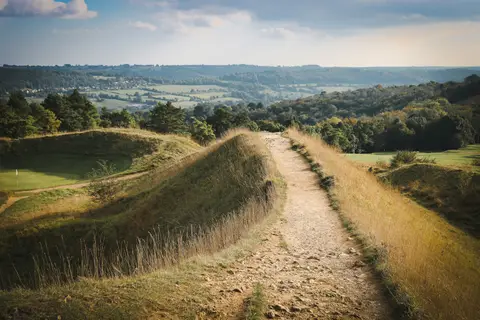
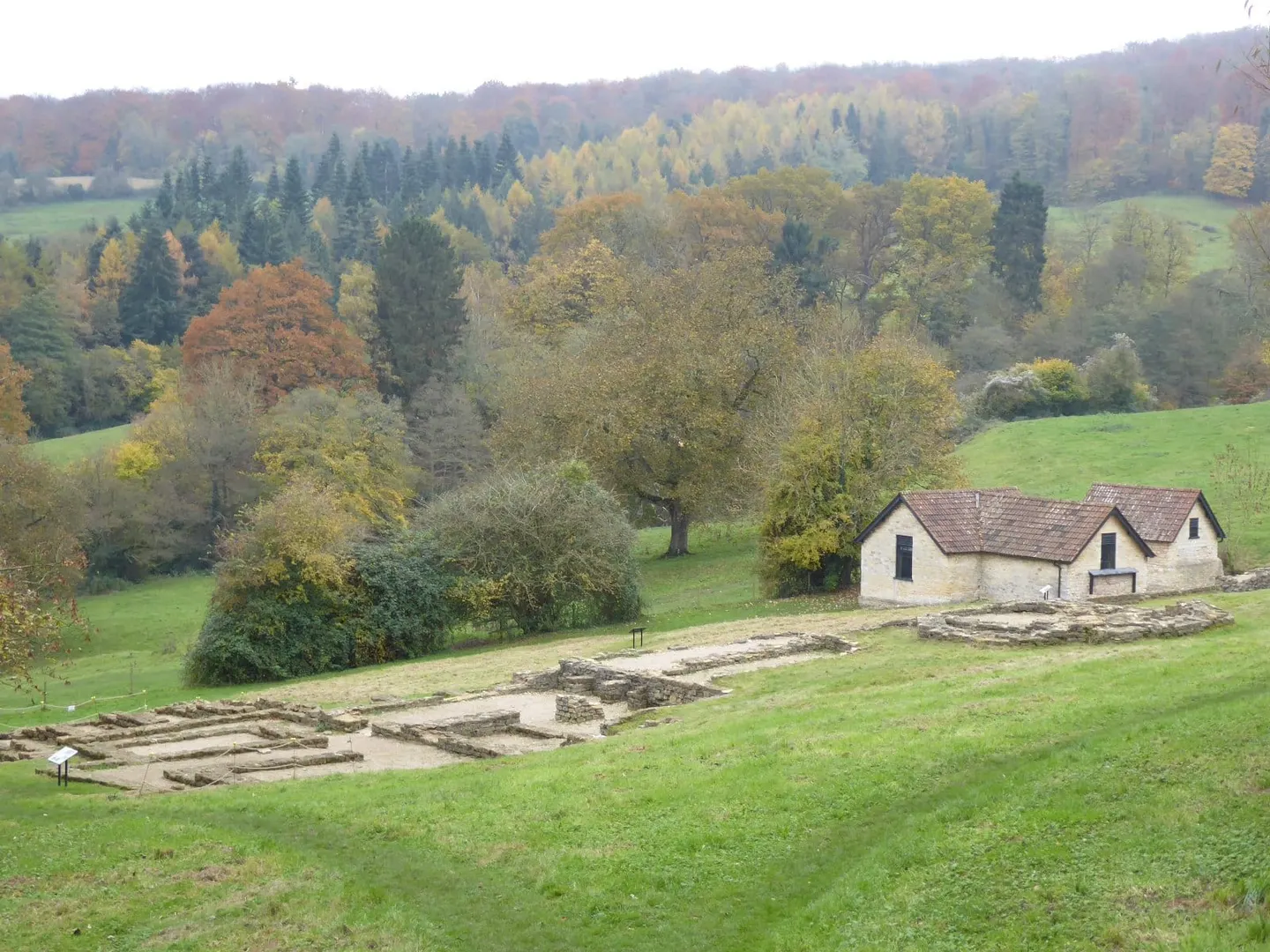
Workers digging out an old tree stump here in 1818 uncovered the remains of Great Witcombe villa, one of the largest houses built in Roman Britain and one of a cluster of wealthy villas that once dotted this stretch of the Cotswolds. Terraced into the hillside below Cooper’s Hill, right on the line of the Cotswold Way, it was built around AD 250 and stayed home to a wealthy Romano-British family, and the people who worked for them, for close to two centuries.
What survives today are the low stone walls that trace out the villa’s plan, along with a bath house at one end whose cold room held a mosaic floor covered in fish and sea creatures, now kept under a modern shelter to protect it. Nearby, a part-underground room lined with niches for statues and fed by a spring-water pool was probably used for some kind of religious ritual; which god the Romano-British occupants worshipped there isn’t recorded.
Archaeologists have returned to the site on and off ever since 1818. For now, the villa is shut to visitors. Dryhill Roman villa is a few miles northeast if you want to compare two very different survivals.