Windmill Hill, Avebury
The hilltop above Avebury whose broken rings of Neolithic ditches lent their name to an entire early farming culture
Open accesson National Trust land that is open on foot at all times
Earthworks onlybanks, ditches and platforms — read the ground, not walls
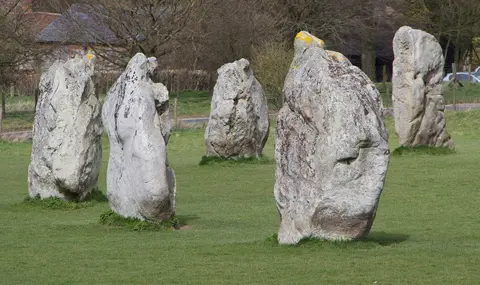
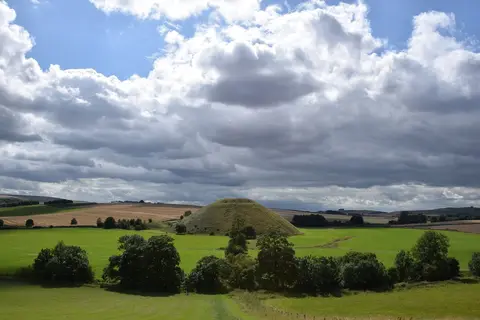
There isn’t much to see at Windmill Hill, just three faint rings of ditch and bank across a quiet hilltop north-west of Avebury. This is a causewayed enclosure, an early Neolithic earthwork where the ditches are broken by regular gaps, or causeways, rather than dug as one continuous ring, and at 21 acres it’s the largest known example in the country. People started digging the ditches here around 3700 BC, and archaeologists later named an entire early farming culture after the site, the Windmill Hill culture, based on the pottery style found inside them. Alexander Keiller bought the site during the 1920s, rescuing it from a planned wireless station, and dug up flint tools, pottery and animal and human bone, including the skeleton of a child, now kept in the Alexander Keiller Museum in Avebury. It’s a mile and a half uphill walk from Avebury, with the stone circle and Silbury Hill both close by below; the hilltop itself is open and free.