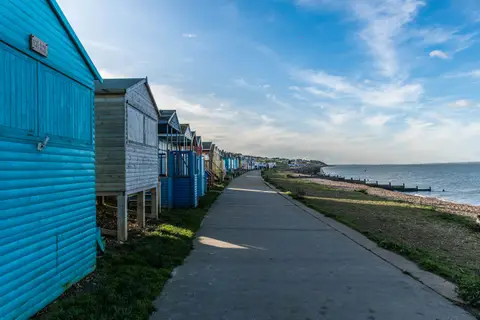
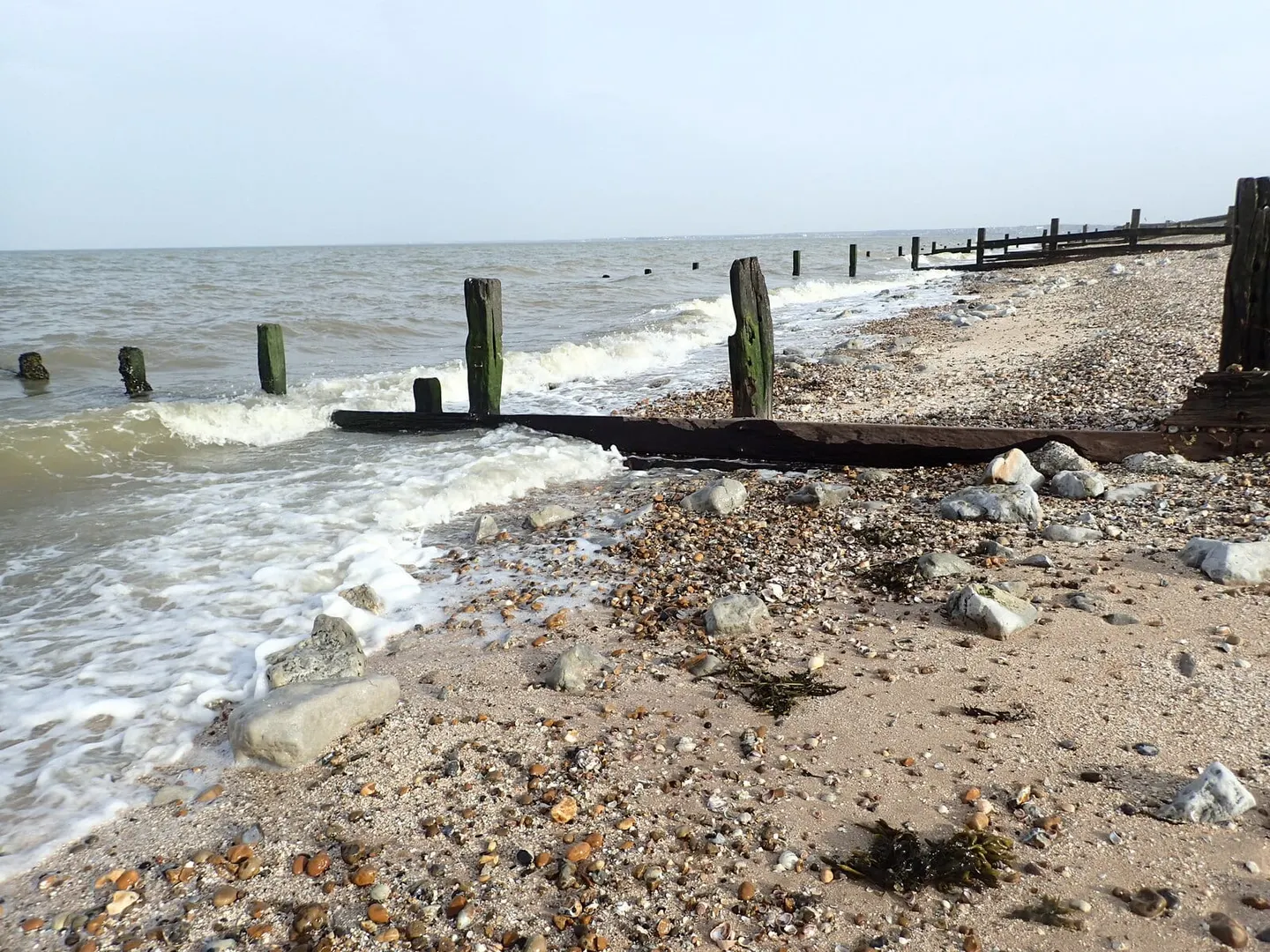
Queen Sexburga founded Minster Abbey on the Isle of Sheppey in around 664 as a Benedictine nunnery, one of the earliest in England; the Danes burned it in 835, and it was rebuilt from 1123 with two churches side by side, one for the nuns and one for the parish. The island itself sits in the Thames Estuary off the north Kent coast, cut off from the mainland by a tidal channel called the Swale; the modern Sheppey Crossing carries the main road across it, and the older Kingsferry Bridge, which lifts to let ships through, carries a slower road and the railway. The island’s low clay cliffs are a well-known source of fossils, especially around Minster and Warden Point, where sharks’ teeth and other remains wash out of the London Clay after storms. Inland, the grazing marshes of Elmley hold breeding and wintering birds in large numbers on a reserve you pay to enter, while Leysdown, a few miles round the coast, is Sheppey’s main seaside resort, with a long stretch of sand.
© Marathon / Geograph · CC BY-SA 2.0