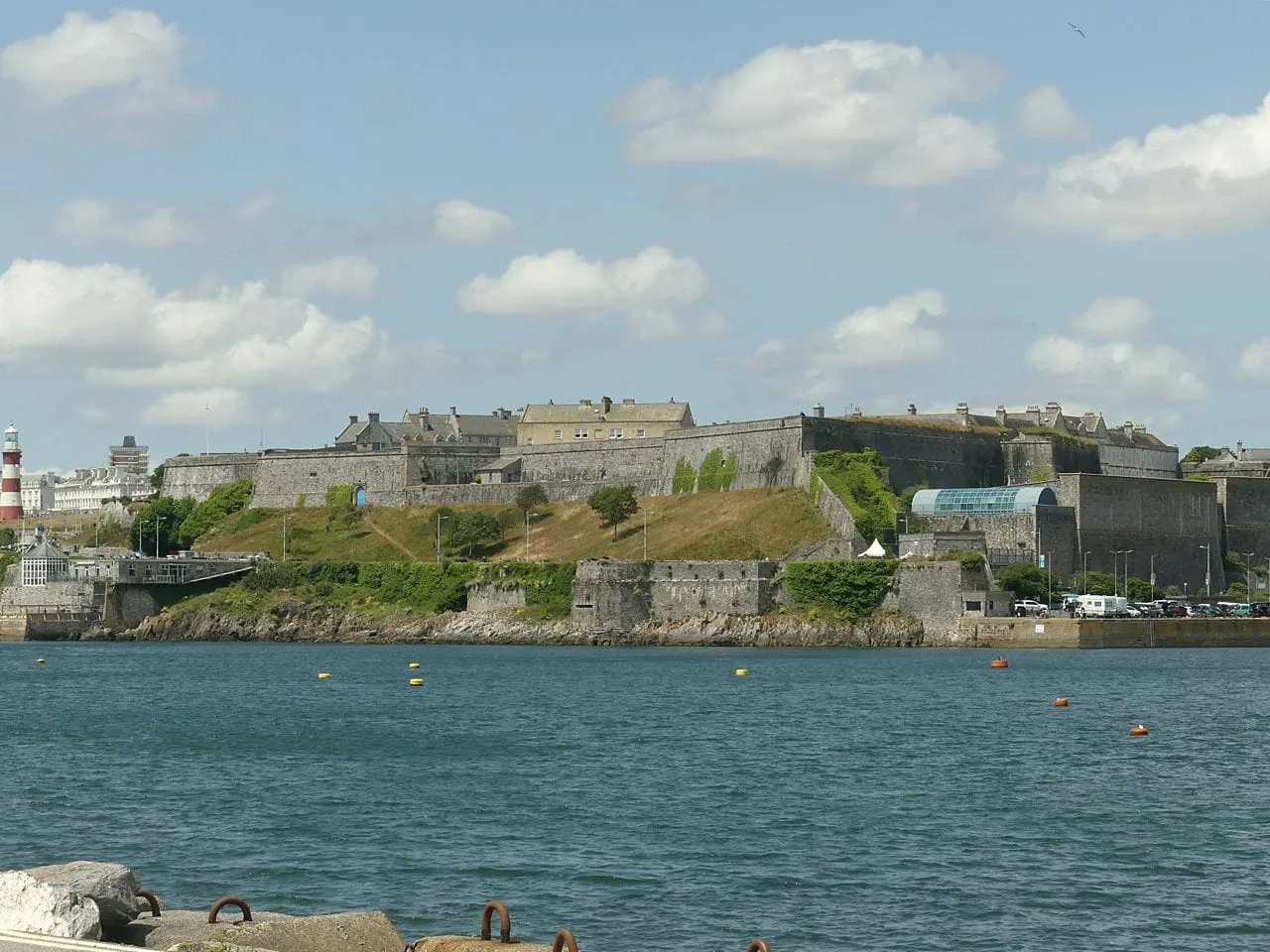
Still a working army barracks today, this vast 1660s artillery fort stands at the eastern end of Plymouth Hoe behind a carved baroque gateway
Open to visitorsan English Heritage site — check opening times and admission before you go
Substantial ruinsruined, but plenty survives above ground
Charles II ordered the Royal Citadel built in the 1660s to guard Plymouth Sound against the Dutch, and, just as pointedly, to keep an eye on a town that had backed Parliament against his father during the Civil War. The engineer Sir Bernard de Gomme folded an older Tudor fort, put up for Francis Drake in the 1590s, into his new design, which is why the walls follow such an irregular line rather than a neat star shape. Local limestone makes up most of the fort, but the grand entrance, an ornate baroque gateway facing the Hoe, is carved from Portland stone. The foundation stone, laid in 1666 by John Granville, Earl of Bath, is still there in the wall today.
The Royal Citadel remains in military use. It’s home today to 29 Commando Regiment Royal Artillery, part of the UK’s commando forces, and you can only get inside on a guided tour, since it’s a working army base with its own security rules. By the 1750s, the fort held 113 guns behind walls up to 21 metres high.
The South West Coast Path runs past the walls, and Smeaton’s Tower, the relocated lighthouse on the Hoe, is a short walk west.