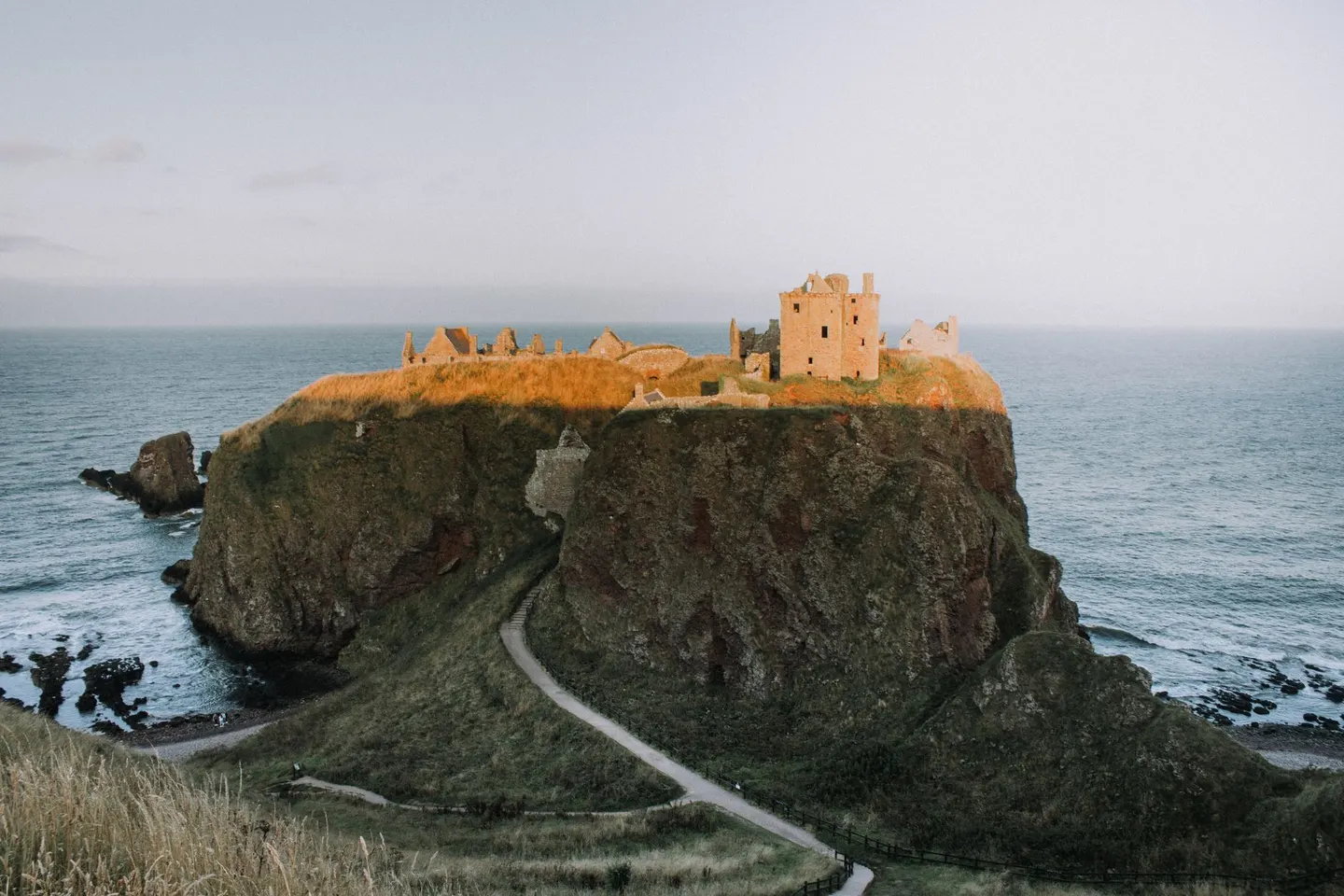
A dramatic ruined fortress on a sea-girt rock south of Stonehaven, where the Scottish crown jewels were once hidden
Open accessScotland's right of responsible access applies
Substantial ruinsruined, but plenty survives above ground
Dunnottar Castle stands on a flat-topped rock almost surrounded by the North Sea, joined to the mainland only by a narrow neck, a little south of Stonehaven on the Aberdeenshire coast. It is a ruin now, but a big and theatrical one, and the setting is what stops people in their tracks: sheer cliffs, seabirds, and the castle buildings scattered across the top of the rock.
Its most famous moment came in the 1650s. When Oliver Cromwell’s army invaded Scotland, the Honours of Scotland, the country’s crown, sceptre and sword, were brought to Dunnottar for safe keeping and held through a long siege before being smuggled out and hidden. The castle was also used as a grim prison: a group of Covenanters, Presbyterians who refused to accept the king’s authority over the church, were locked in a cellar here in 1685, remembered as the Whigs’ Vault.
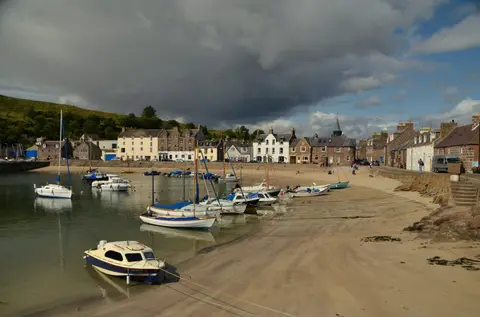
Getting there means a walk from the car park and then a steep flight of steps down to the neck and back up onto the rock, so wear proper footwear and take your time. The castle is open to visitors for an admission charge. The harbour town of Stonehaven is a couple of miles north, and you can reach the castle on foot along the clifftop from Stonehaven Harbour if you want to make a walk of it.