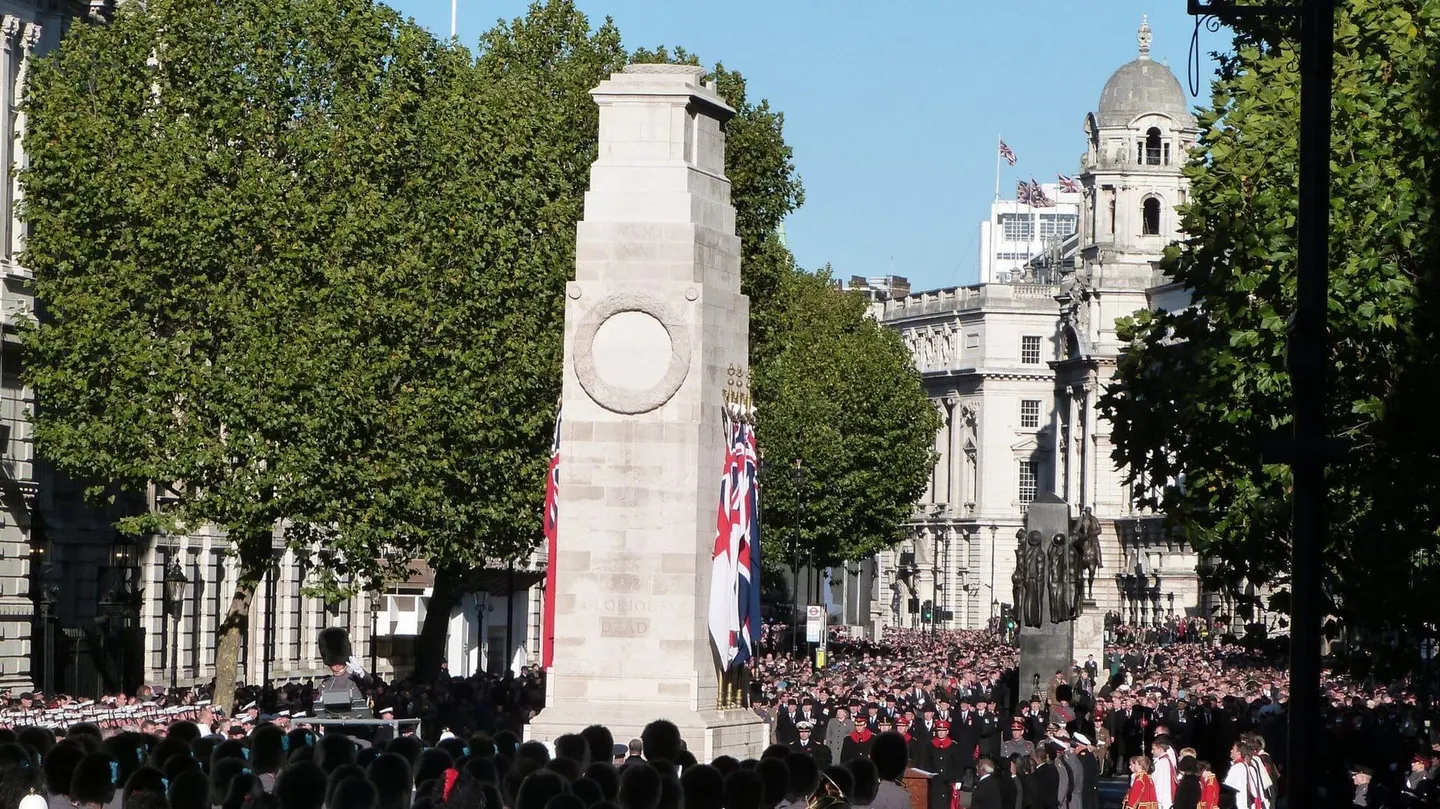
Edwin Lutyens's Portland stone war memorial in Whitehall, unveiled in 1920 and still the centre of the nation's Remembrance Sunday
Edwin Lutyens designed the Cenotaph first as a temporary monument, built from wood and plaster for the Peace Day parade held in July 1919 on the orders of the prime minister, David Lloyd George. Its name comes from the Greek for empty tomb, since it marks the war dead without holding any of their remains. Crowds began leaving wreaths within days of the unveiling, and the public response was strong enough that the government agreed to replace the temporary structure with a permanent one in Portland stone.
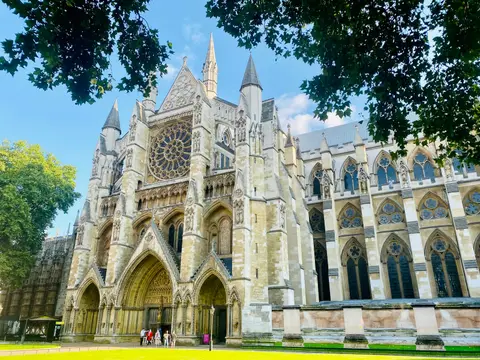
King George V unveiled the permanent Cenotaph on 11 November 1920, two years to the day after the Armistice, and at the same unveiling an unidentified soldier was buried at Westminster Abbey as the Unknown Warrior. Lutyens kept the design free of religious or national symbols, apart from flags representing each of the armed services along its sides, so that it could stand for the dead of all faiths and every part of the country. The inscription reads simply “The Glorious Dead”.
Each year on Remembrance Sunday, the Sunday nearest 11 November, the National Service of Remembrance takes place at the Cenotaph. English Heritage cares for the monument today; it stands free in the middle of Whitehall, with traffic passing on both sides. The Jewel Tower, another English Heritage site, is a few minutes’ walk south, and Wellington Arch is a longer walk west across St James’s Park and Green Park.