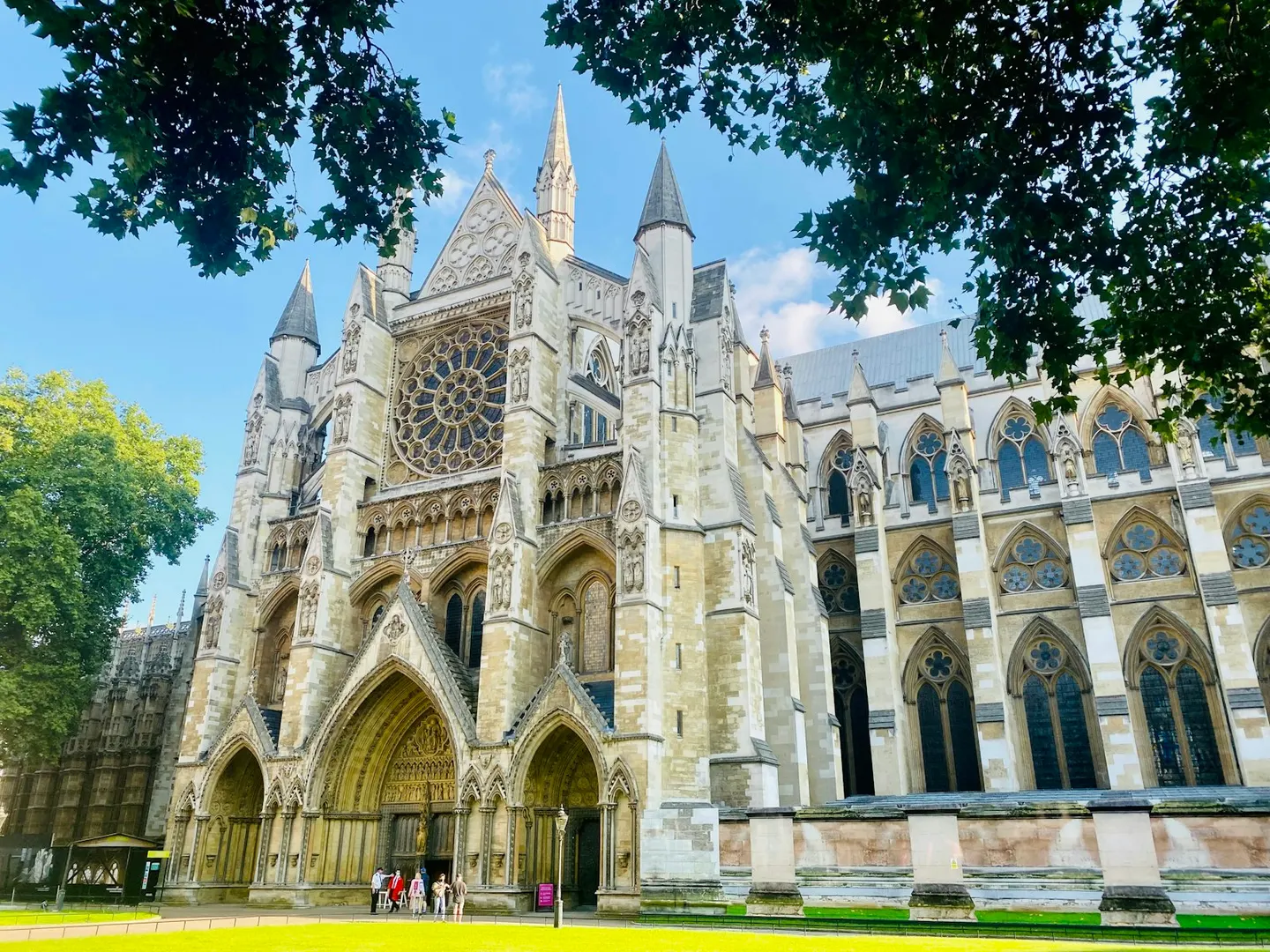
The abbey church where English and British monarchs have been crowned since 1066, with its medieval chapter house still off the cloister
Open to visitorscheck opening times and admission before you go
Standing remainssubstantial fabric survives to stand in front of
Forty English and British monarchs have been crowned in Westminster Abbey since William the Conqueror on Christmas Day 1066, and 18 are buried here. Benedictine monks had a monastery on the site by the mid-900s. Edward the Confessor built the first great church in the 1040s and lies inside it, and Henry III began the Gothic church you see today in 1245. After the monastery was finally dissolved in 1559, Elizabeth I made the abbey a royal peculiar, a church that answers to the sovereign rather than to a bishop.
More than 3,300 people are buried or remembered inside. Poets’ Corner, in the south transept, holds the graves of writers including Dryden, Tennyson, Dickens and Kipling, and the grave of the Unknown Warrior from the First World War lies near the west door. At the east end, the Henry VII Chapel has a carved stone ceiling of hanging pendants that looks almost like lace.
Two rooms from the old monastery open off the east cloister. The octagonal chapter house, where the monks met daily, was built by royal masons around 1250 and keeps its glazed tile floor and faded wall paintings; the king’s council and early parliaments met in it. Next door, the Pyx Chamber is part of an undercroft from the 1070s. English Heritage looks after both rooms, and its members get in free.
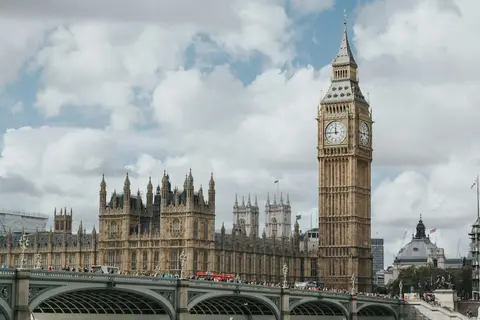
Sightseeing is ticketed from Monday to Saturday; on Sundays the abbey is open for worship only. Westminster Underground station is across the road, the Palace of Westminster stands just to the east, and St James’s Park is a short walk west.