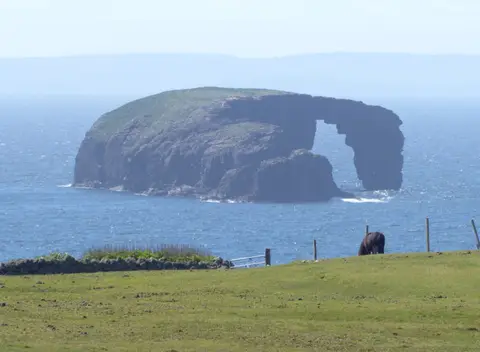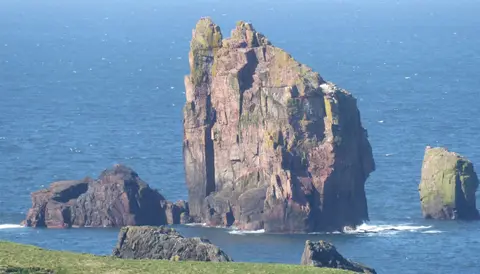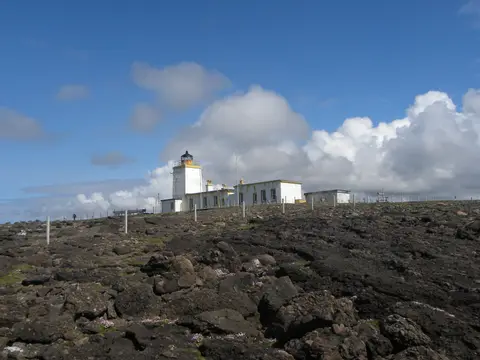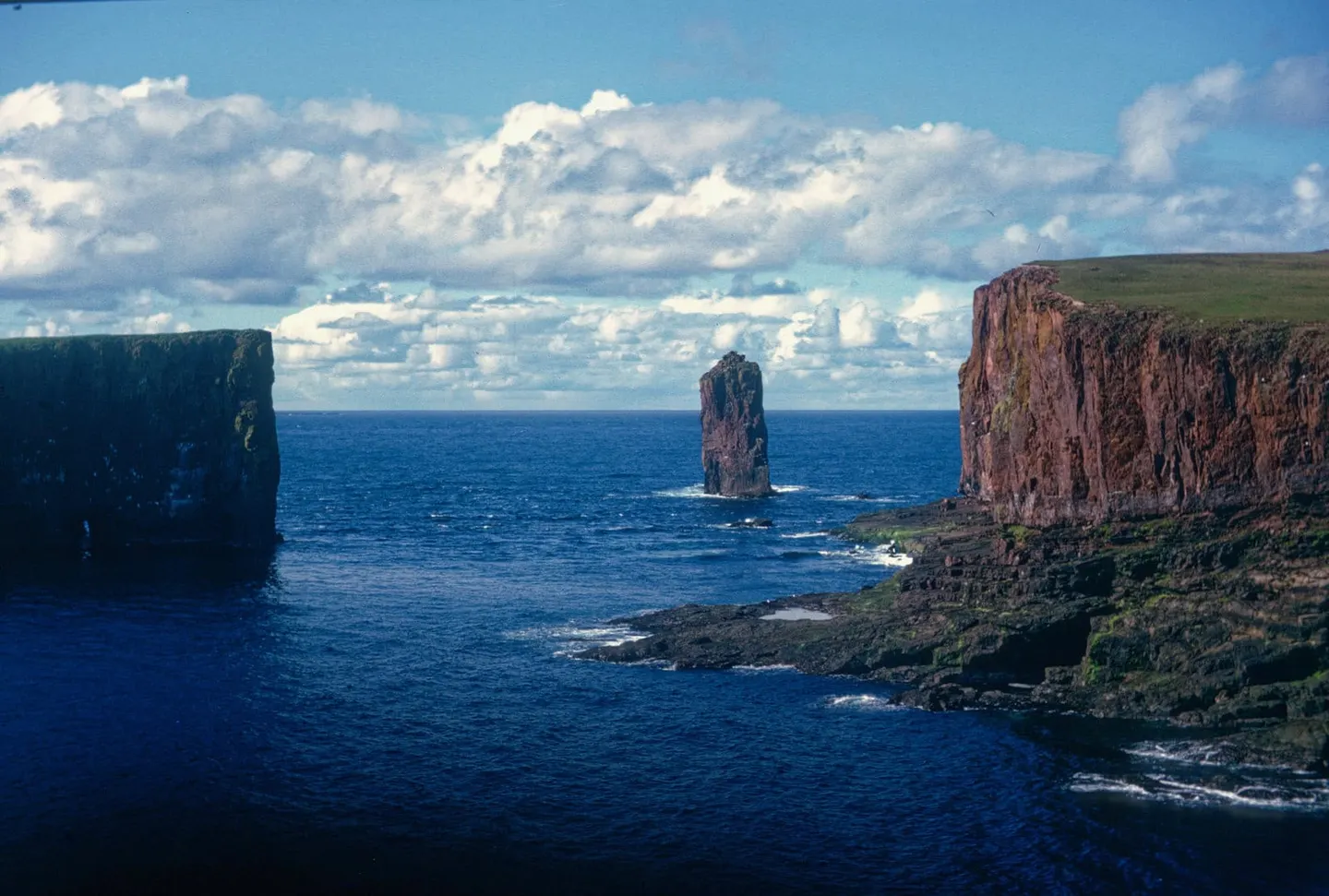
The sea has worn Papa Stour’s soft volcanic rock into one of Britain’s largest concentrations of caves, arches, stacks and blowholes. One cave, Hol o’ Bordie, runs some 300 metres into the cliffs, wide enough to row a boat through, and the ferry in passes Brei Holm, an islet pierced clean through by a tunnel cave.
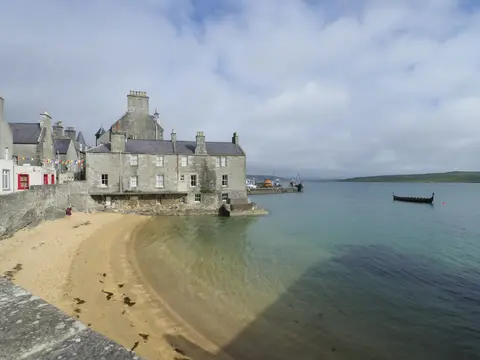
The passenger and car ferry, the Snolda, crosses from West Burrafirth on the Shetland Mainland to Housa Voe in about 45 minutes, on booked sailings only. Only a handful of people live here now, seven at the last count, after a much bigger population left through the 20th century. A Neolithic chambered cairn, a burial mound of stacked stone, sits on Round Hill, one of several on the island’s low hills. Near the harbour, archaeologists excavating Da Biggins between 1977 and 1982 found the timber floor of a stofa, a Norse hall, linked to Duke Hakon of Norway; a 1299 document about the site is the oldest to survive from Shetland, and a modern reconstruction now stands nearby.