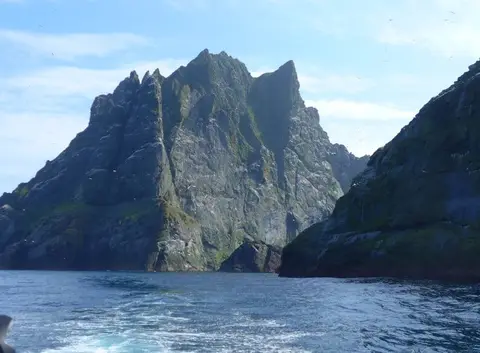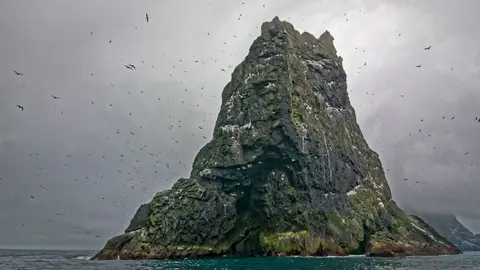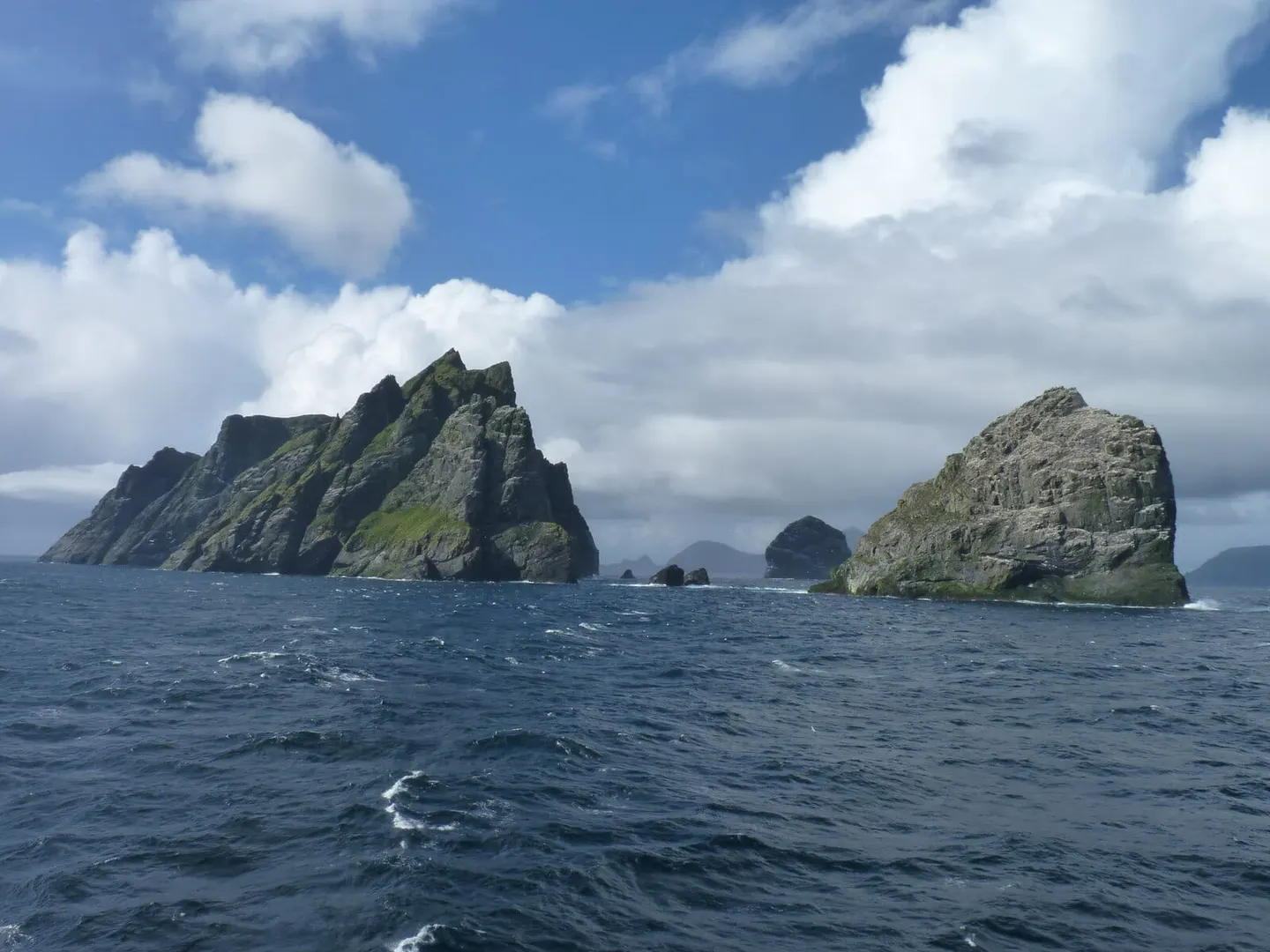
A 172-metre sea stack off Boreray in St Kilda, white with nesting gannets and once climbed by islanders harvesting the birds
Access uncleara sea stack with no landing — seen from day boat trips out of Harris or Skye
Stac Lee is a sea stack, a sheer block of rock standing on its own in the Atlantic about 550 metres off the western tip of Boreray, in the St Kilda archipelago. It rises 172 metres straight out of the water, which makes it the second-tallest sea stack in Britain after its neighbour Stac an Armin. It counts as a Marilyn, a hill with a drop of at least 150 metres on every side, only because the sea does the dropping. You’ll also see the name spelled Stack Lee, and in Gaelic it’s Stac Lì; the traveller Martin Martin wrote it down as “Stac-Ly” in 1698.
The stack’s shape changes as a boat moves round it. From the south it looks broad and blocky, from the west it thins to a needle, and from the south-east it curls over like a hook. The ledges are packed with northern gannets, and in summer the rock looks white from a distance. Boreray, Stac Lee and Stac an Armin together hold around 60,000 breeding pairs, the largest gannet colony in the world, and a count in 2004 found about 14,000 occupied nests on Stac Lee alone.
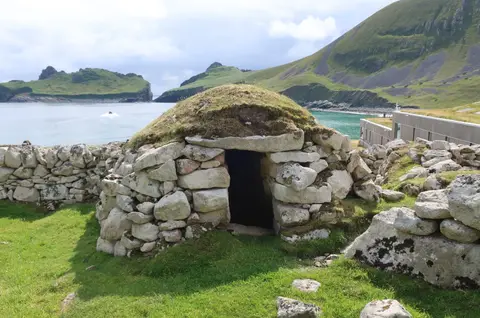
The St Kildans who lived on Hirta, the main island, until 1930 climbed the stack to take gannets and their eggs for food. They landed by lassoing an iron peg fixed in the rock and jumping across when the swell lifted the boat, and a small stone bothy on the stack, big enough for two people, sheltered them on overnight trips. Only a handful of climbing parties have been up since, many of them wardens and naturalists counting the birds.
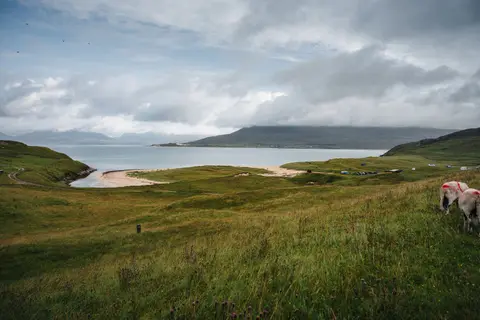
Seeing it means a day boat to St Kilda from Harris or Skye, which only sails in settled weather and often cancels at short notice. Trips usually take in Boreray and its two stacks on the way to or from Hirta, and a boat’s-eye view is as close as you’ll get. St Kilda is a World Heritage Site and a national nature reserve, in the care of the National Trust for Scotland.
More at hill-bagging.co.uk