A remarkable heap of a settlement at Shetland's southern tip, lived in from the Bronze Age through Viking times to a laird's house
Open to visitorsa Historic Environment Scotland site — many are free to wander; staffed ones charge and keep set hours
Substantial ruinsruined, but plenty survives above ground
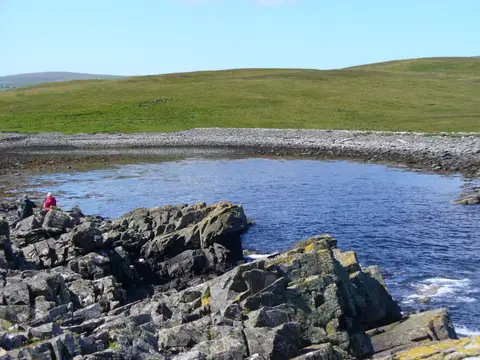
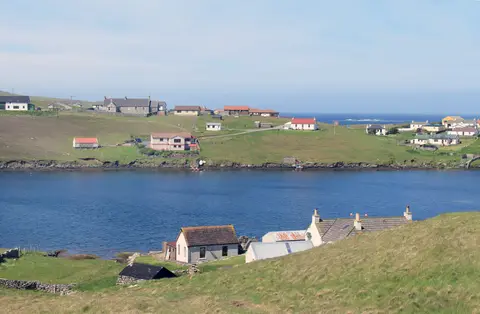
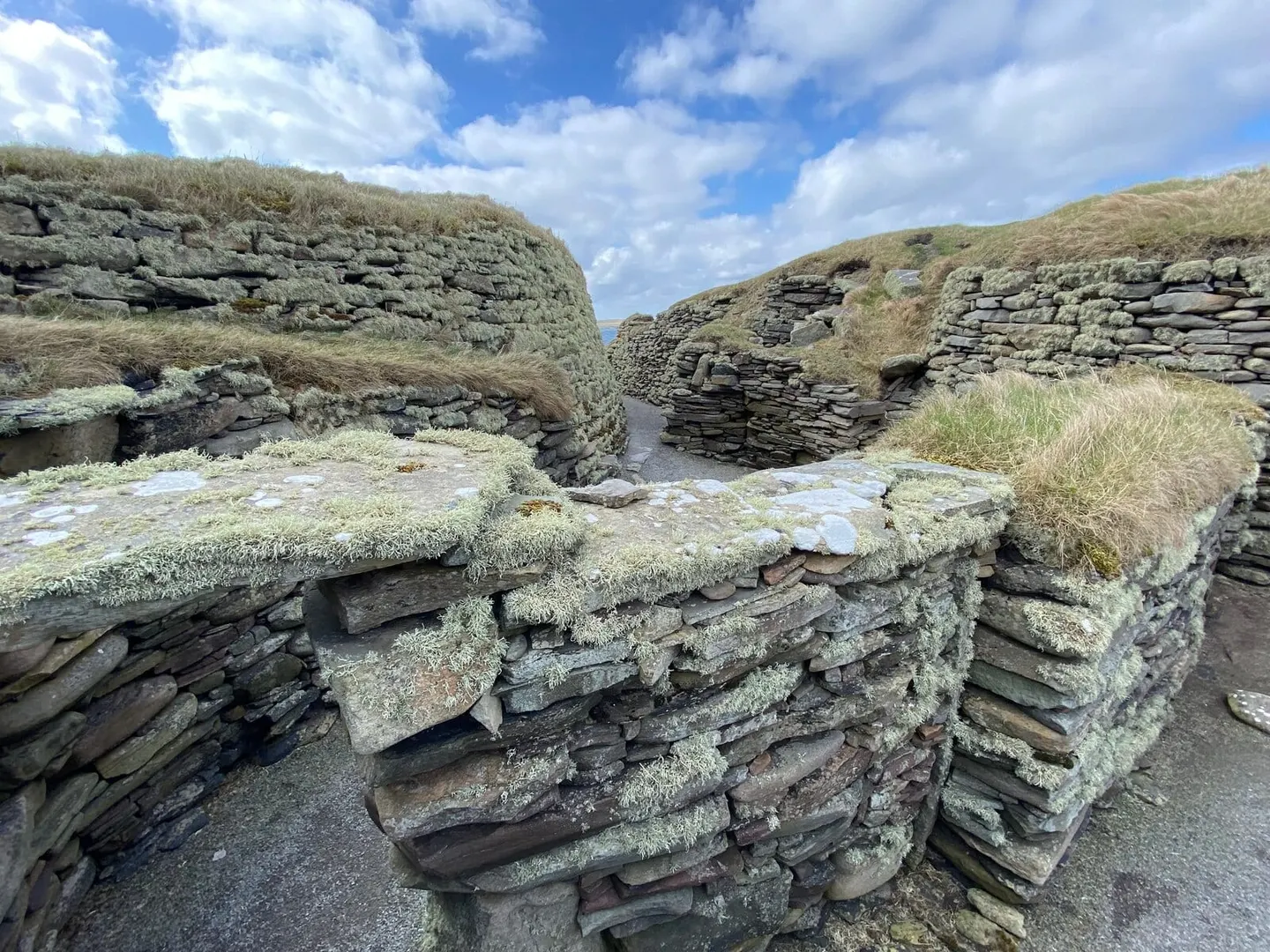
Jarlshof is really several settlements stacked on top of one another, one of the most complete records of everyday life anywhere in Britain. People lived on this spot by the sea for something like 4,000 years, and each age built over the last, so the ruins run from the Bronze Age right up to the 1600s. You can trace the shapes as you walk round: early stone houses, the base of an Iron Age broch (one of the round drystone towers of the period), the curious clover-leaf floors of “wheelhouses” from the same era, then a cluster of Norse longhouses left by Viking settlers who farmed here for generations. On top of all that stand the walls of a laird’s house from the 1500s and 1600s. Much of it lay buried under sand and grass until a great storm in the late 1800s tore the covering away and revealed the older buildings beneath. The name is a modern invention: Walter Scott coined “Jarlshof”, meaning the earl’s house, for the ruined laird’s hall when he set part of his novel The Pirate here. Historic Environment Scotland runs the site, near the southern tip of Shetland. Sumburgh Head Lighthouse, with its seabird cliffs, is a short way on and worth the same trip.