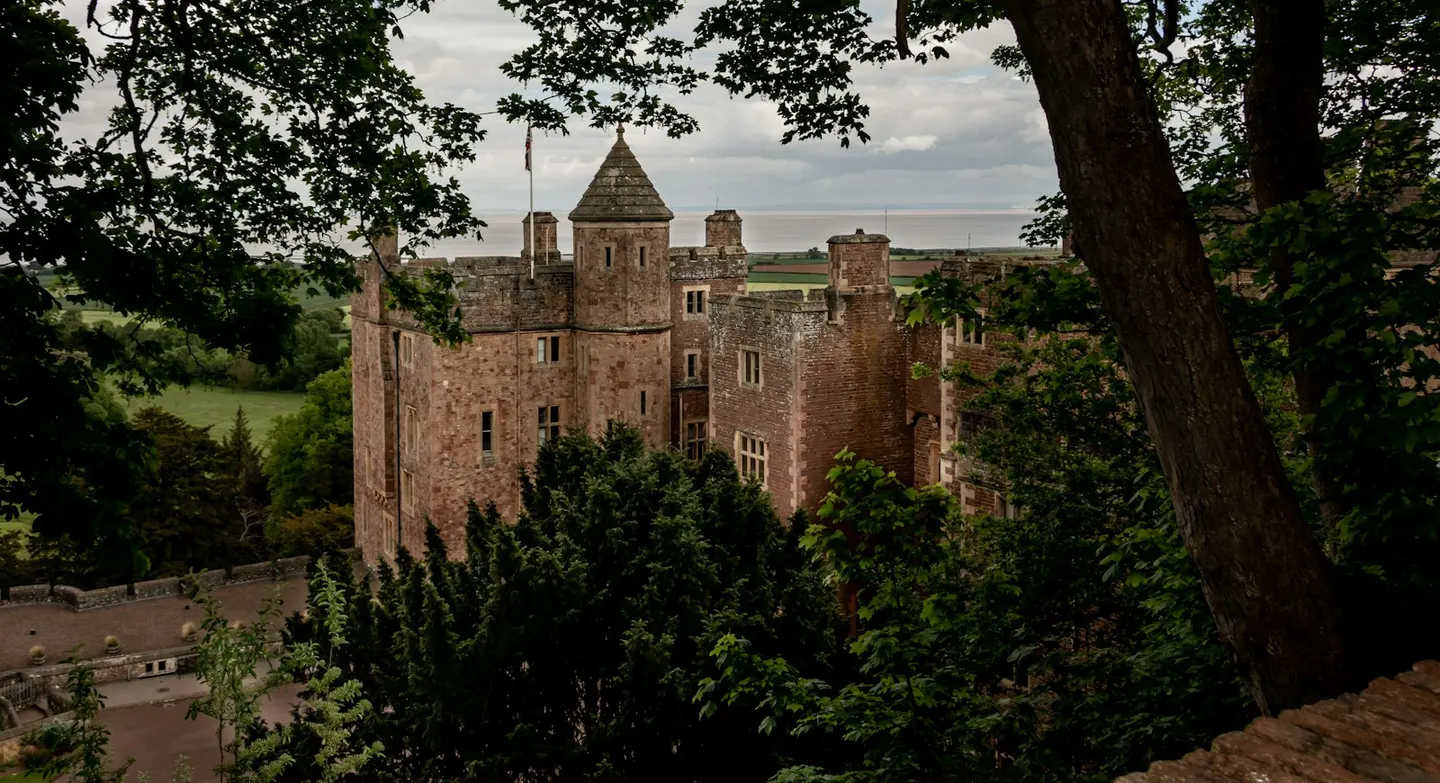
A wooded castle hill above medieval Dunster, home to one family for six centuries and now in National Trust care
Open to visitorsa National Trust place — check opening times and admission before you go
Standing remainssubstantial fabric survives to stand in front of
The Luttrells got Dunster in 1405 and stayed for the better part of six hundred years, eighteen generations of them, which is the sort of continuity that shows in a building. What you see from below is mostly Victorian: George Luttrell brought in the architect Anthony Salvin in the 1860s to turn a patched-up old fortress into a comfortable country house with battlements for show. The older bones are still there underneath if you go looking.
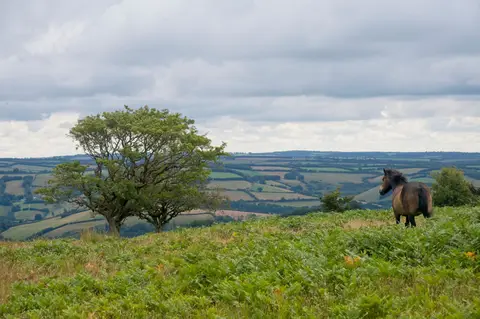
Down in the wooded garden by the river is the watermill, and it genuinely works — there’s been a mill on the spot since Domesday, though the present building dates to 1780. The sheltered, south-facing terraces grow things you don’t expect this far north; the castle sits on the very edge of Exmoor, and the hill traps the warmth off the sea.
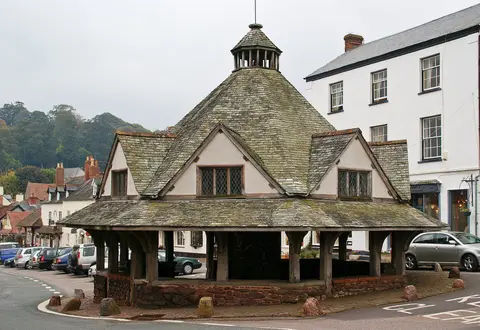
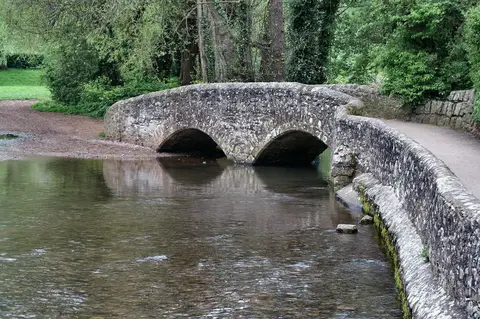
Walter Luttrell handed the whole thing to the National Trust in 1976, so it’s a ticketed visit with set hours rather than a free wander. The village of Dunster at the foot is worth as much time as the castle, with its old yarn market and packhorse bridge. For a walk, Grabbist Hill rises just to the west for the view back over the roofs, and the Iron Age hillfort of Bat’s Castle is a short climb to the south.
Visit on the National Trust website →
More at the National Heritage List entry