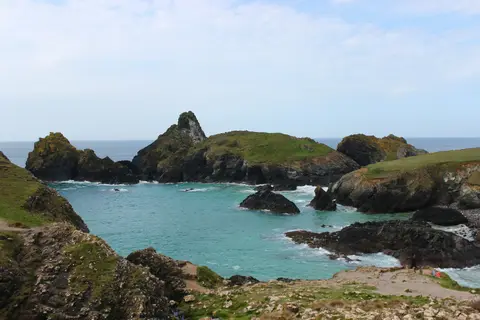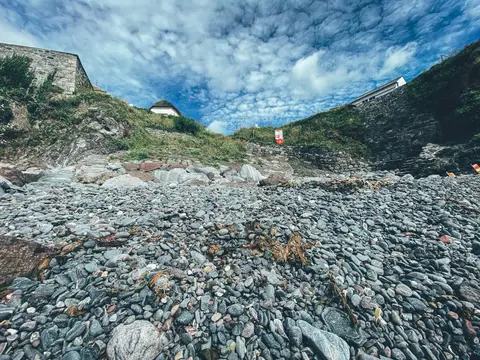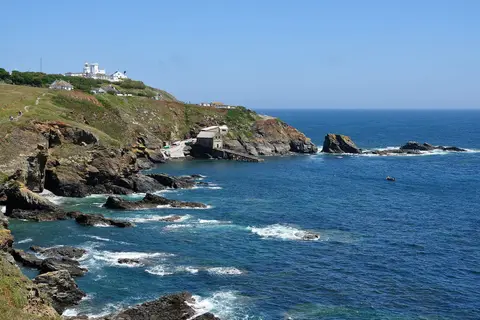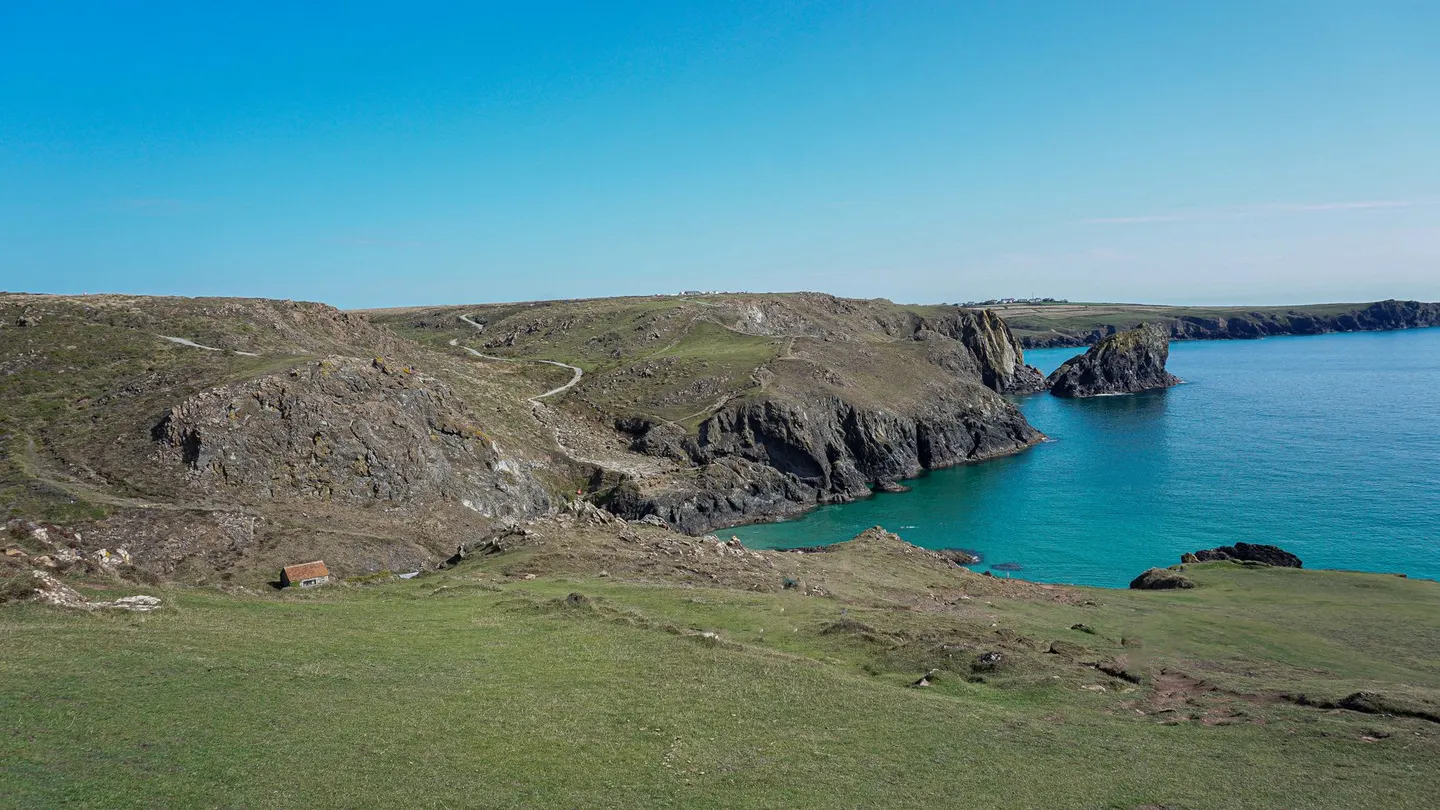
A run of Lizard cliff and heath taking in Kynance Cove, its serpentine rocks and turquoise water some of the best-known on the coast
Open accessNational Trust land — free to wander
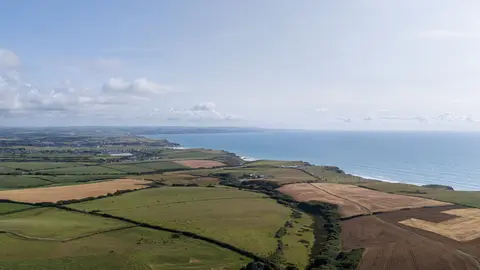
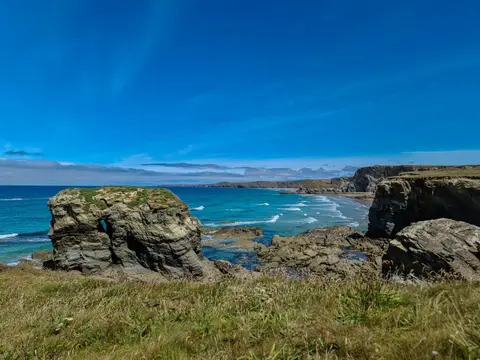
This is the western shoulder of the Lizard, the run of cliff and clifftop heath stretching from the wild grazing of Predannack Downs down to Kynance Cove. Kynance is the star and one of the most recognisable spots in Cornwall: a small beach of pale sand between dark rocks and offshore islands, with water that turns a startling turquoise when the sun is out. The rock is serpentine, a smooth greenish-red stone that the Victorians loved to polish, and the cliffs and stacks here are made of it.
Predannack, up the coast, is quieter and rougher, a stretch of coastal heath that supports some genuinely rare plants, including the Cornish heath that grows well almost nowhere else in Britain. The National Trust looks after this whole length of coast, and the South West Coast Path runs right along the cliff edge, so you can string the two together on foot.
The main thing to know about Kynance is the tide. The beach and the walk out among the rocks all but disappear at high water, so it is worth checking tide times before you go, and giving yourself room to get back. There is a National Trust car park up on the down above the cove, with a walk down the path to the sand. The village of Mullion is the nearest place for supplies, and Lizard Point with its lighthouse, the most southerly tip of mainland Britain, is a short way round the coast to the south-east.