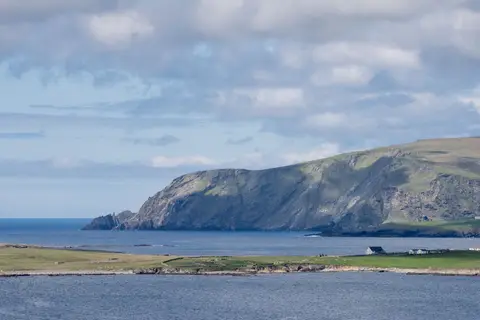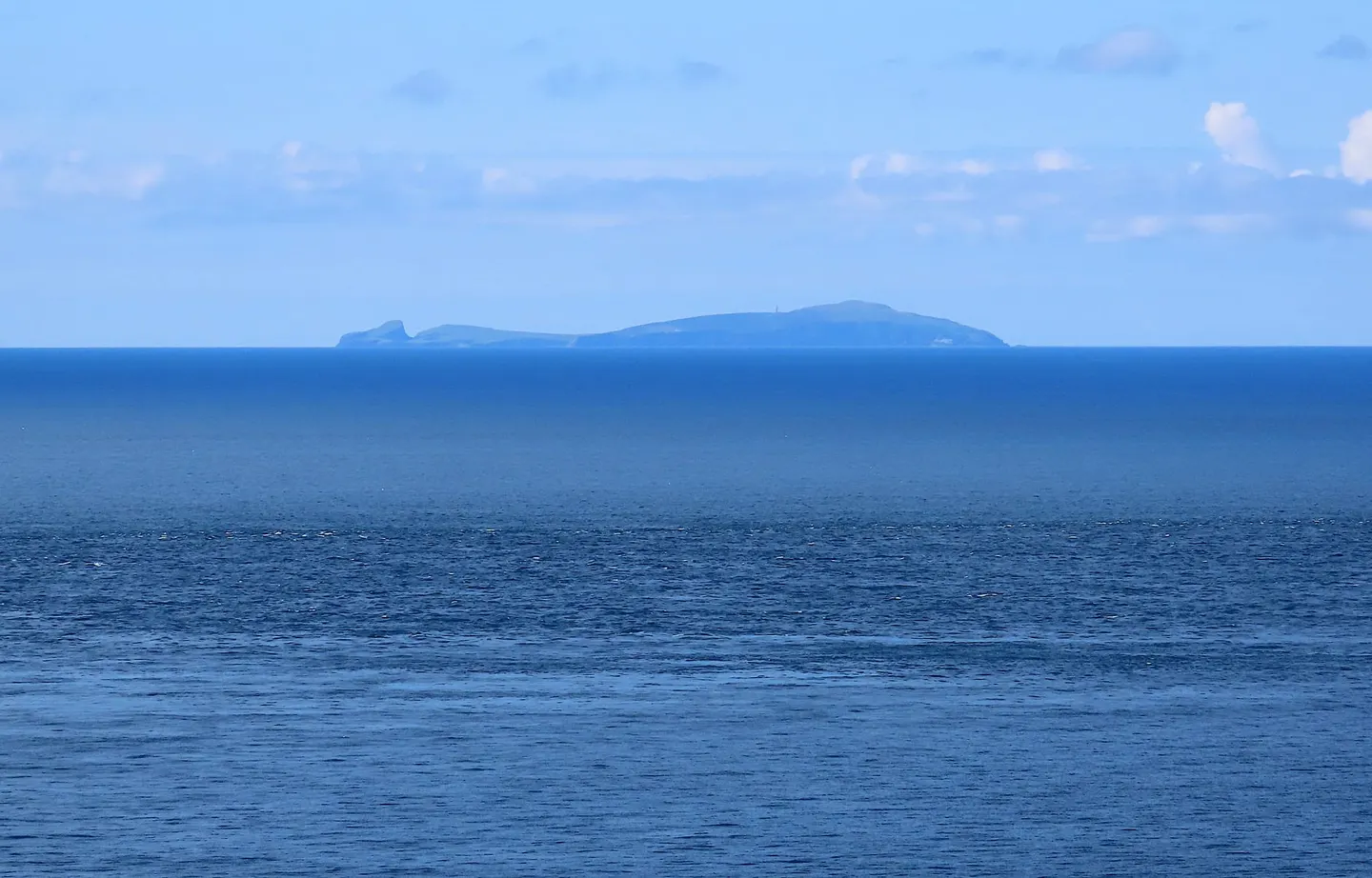
The stationer and ornithologist George Waterston bought Fair Isle in 1948 and set up a bird observatory the same year; in 1954 he sold the island on to the National Trust for Scotland for exactly what he’d paid. Fair Isle sits about halfway between Orkney and Shetland, and with a population of around 44 it’s the most remote inhabited island in the UK. Over 350 bird species have been recorded here, many of them rare migrants that fetch up after storms; the observatory, rebuilt after a 2019 fire and reopened in 2025, runs ranger-led walks and courses through the season. Fair Isle also gave its name to the two-colour patterned knitting technique that spread worldwide after the Prince of Wales wore one in public in 1921, and islanders still knit it today. Ward Hill, the island’s highest point, rises above cliffs on most sides. The Good Shepherd IV mailboat, which carries up to twelve passengers, crosses from Grutness on the Shetland Mainland in around two and a half hours, with some summer sailings instead from Lerwick; a small plane also flies in from Tingwall.